How does website personalization work?
Website personalization consists of three parts: data collection, segmentation and personalization. For these parts to work well together, using the right tooling for each step is essential.
In addition, visitor recognition plays an important role. First-party cookies and IP tracking work together in this regard: cookies record what someone does on the website, while IP tracking provides insight into where the visit comes from and whether there has been previous contact. Together, they provide data that helps to better understand behavior, such as:
The source of the visit (social, organic, advertising),
keywords used through search engines (e.g., Google or Bing),
session duration,
pages visited,
date, time and global location of the visitor
The better this data reveals a visitor's behavior and context, the more targeted personalization can be applied.
1. Collecting data
Personalization starts with collecting reliable data about visitors. Without a complete and up-to-date customer view, personalization remains superficial. Analytics tools read online behavior such as page views, click behavior and how someone scrolls through the page. Customer Relationship Management (CRM) systems add information about a customer or organization, while marketing automation tools show which emails someone has opened or which campaigns have been responded to.
When data from all these sources is synchronized, for example, in a Customer Data Platform, creates one central and complete customer profile.
Tools in data collection
Customer Data Platform (CDP):a Customer Data Platform collects data from various systems and brings them together into one central customer profile. This creates a complete and up-to-date picture of each visitor or customer.
Customer Relationship Management system (CRM):A CRM system contains contact information and information about customers or organizations. It provides insight into who someone is, what purchases have been made and what relationship exists with your company.
Analytics tools, such as Google Analytics 4 (GA4):analytics software shows you how visitors use your Web site. For example, you can see which pages are being viewed, where visitors are coming from and what their online interactions with the website are.
2. Segment
Segment means analyzing collected data and converting it into groups of visitors with similar characteristics or behavior. In B2C this often revolves around interest and buying behavior, while in B2B it is industry, job and organizational characteristics that are important. In this way, it becomes clear which content suits which visitor. Segments can be formed based on previously viewed products, the stage in the customer journey, language or the source of the visit (such as a social ad or email campaign).
Software helps shape these groups automatically. A marketing automation platform Automates the creation of customer segments based on collected data and the corresponding customer profile.
Tools in segmenting
3. Personalization
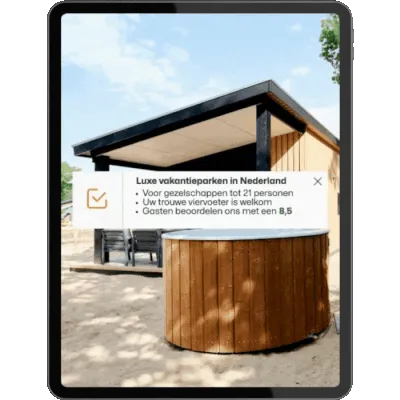
Personalization determines what content a visitor actually sees. This is when the website adapts to who someone is and what they have done before. You can think of it as a digital shop window that is activated once the website knows what stage of the customer journey someone is in or what segment someone belongs to.
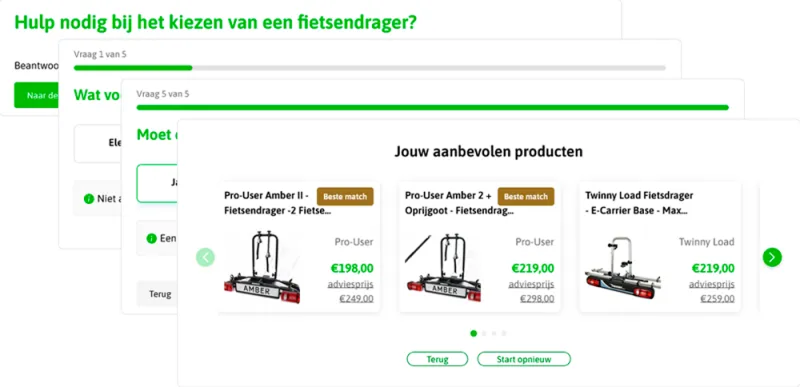
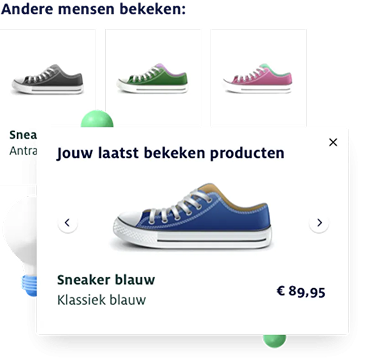
The basis of (content) personalization consists of preset variations of content. Consider a different banner for new visitors, additional explanations for someone still orienting, or product recommendations for someone already further along in the process. The website automatically chooses which version fits best.
Increasingly, AI or machine learning is helping with this. This technology looks at behavior and determines which content is likely to work best. Real-time triggers also play a role: for example, when someone hesitates or lingers a long time on a page, the website can immediately show additional information or a relevant suggestion.
Personalization works well only when data, segments and activation align nicely. Only then can the website display the right content at the right time.
Tools in personalization
Content Management System (CMS): displays dynamic banners, texts, widgets and recommendations based on segment and behavior.
Email system: Uses segment information to send relevant follow-up communications.
Advertising platforms: deploy segment data for targeted ads outside the website.