Every visitor to your website is different. Some are looking for information for the first time, while others want to complete a purchase. With generic content on your website, you’re missing out on opportunities to convince visitors at the right moment. The online personalization tool WiQhit cleverly addresses this with a powerful and easy-to-understand Customer Journey Model.
What is WiQhit's Customer Journey Model?
The Customer Journey Model from WiQhit shows the journey a visitor takes from their first visit to the website through to a potential purchase. This model helps marketers create targeted personalizations to display content that matches the visitor’s stage, target audience, and segment. The result: more relevant communication and a higher chance of conversion.
The three building blocks of the model
The WiQhit model consists of three key components:
1. Stages of the Customer Journey
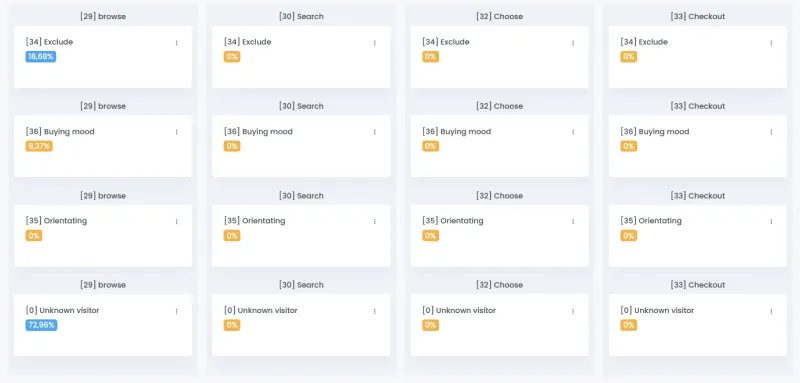
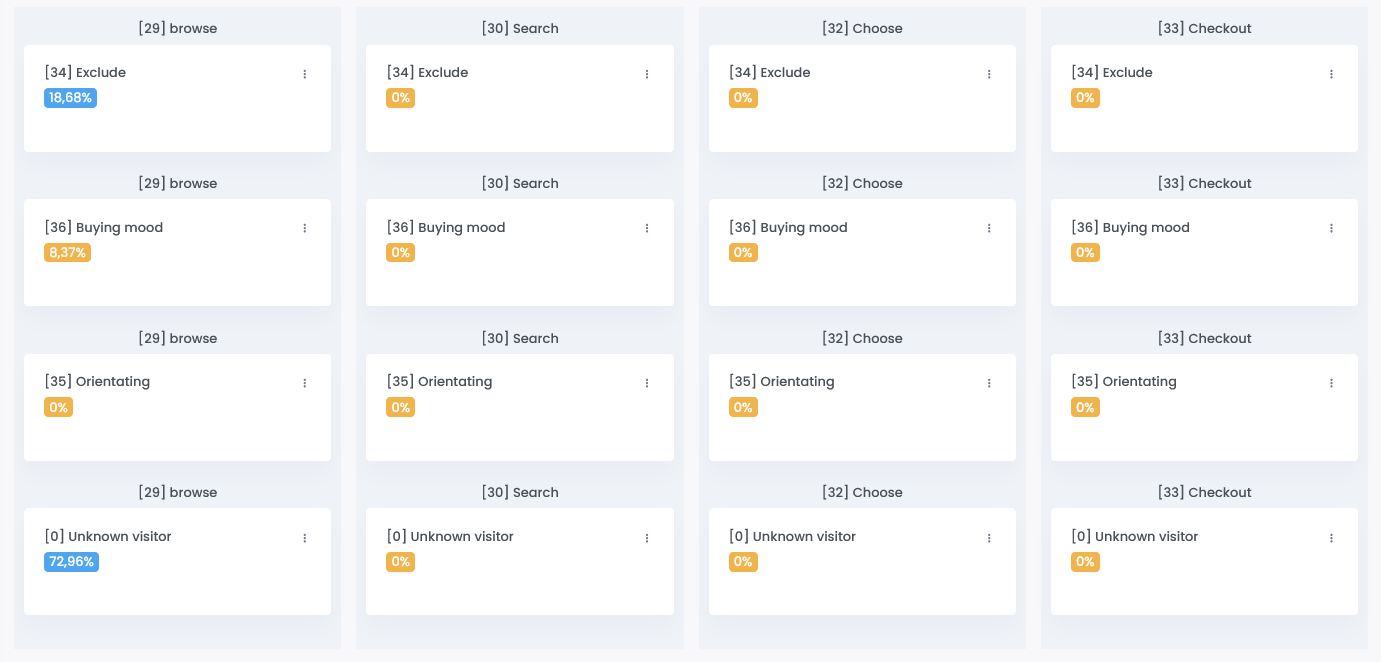
The customer journey is divided into four phases. Each phase indicates the extent to which the visitor shows an intention to purchase. Personalization is tailored accordingly, with the checkout process receiving the highest priority.
•Browse (Lowest priority)
The visitor has not yet shown any clear intent. Think of a first visit to a general landing page.
•Search
The visitor actively looks around and views multiple products or categories. This indicates an initial serious interest.
•Choose
Visitors want to make a decision and are looking for confirmation. Think of comparisons, reviews, or customer ratings.
•Checkout (Highest priority)
The visitor is in the process of checking out. Now it’s important to address any concerns and make the process as smooth as possible.
2. Target Audiences
WiQhit distinguishes between different types of visitors, each with its own level of willingness to purchase. Visitors are categorized into these groups based on their behavior.
•Unknown visitor (Lowest priority)
New or anonymous visitors about whom little is known. This group is often shown more general content.
•Orientation
Visitors who are still browsing. They want to know what’s available, but don’t yet have a specific intention to buy.
•Shopping Mood
Visitors who show a clear interest in specific products. The likelihood of a purchase is high.
•Exclude (Highest priority)
Visitors who are excluded from personalization, such as existing customers or traffic from certain sources (e.g., Facebook, Instagram).
3. Segments
Further segmentations can be applied within the target groups. Examples include:
• Returning visitors
Visitors who have visited the site before recognize certain pages or products. Their behavior may therefore be interpreted differently than that of new visitors.
Other possible segments include, for example, visitors who arrive through a particular campaign, or users with a specific interest in a product.
Personalization Based on the Model
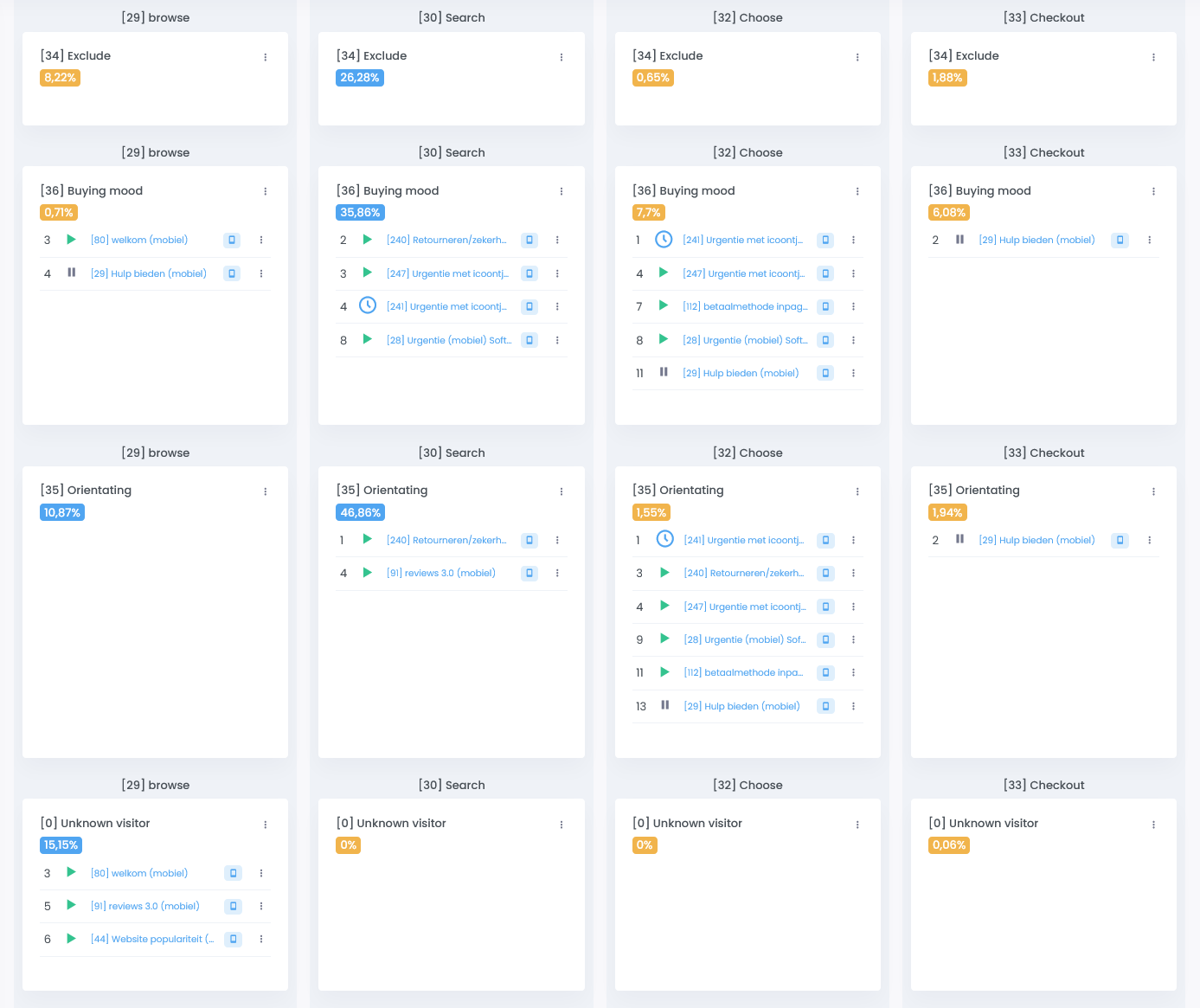
The power of WiQhit lies in the combination of these three elements. By combining phase, target audience, and segment, scenarios emerge to which targeted content or calls to action can be tailored. Here are a few examples:
• A visitor in the Choose Phase and with a Shopping Mood will see a review section or a "most popular" label to help them make their decision.
• A returning visitor in the Search phase may be reminded of products they've viewed before.
• A visitor in the Checkout Phase which falls under Shopping Mood, sees a personalized motivational message (“It’ll be yours in just a moment!”) or receives a last-minute discount code.
Conclusion
WiQhit’s Customer Journey Model provides a practical framework for online personalization. By making smart use of the stage in the customer journey, the type of visitor, and additional segment information, you can show your website visitors exactly what will help them move forward. Not based on gut feeling, but on data and behavioral recognition. That is the essence of smart online marketing.